

Vitamin B12 and its importance
Vitamin B12 which is also known as cobalamin, is an essential micronutrient required by our bodies found in various dairy products, beef, fish and chicken.1
It is necessary for the production of red blood cells and normal functioning of the neurological system.2
This vitamin is found in animal based products so a diet low in these products can cause an insufficiency.3
Recognizing this nutritional disorder is important since it can have serious health implications especially in children leading to growth failure, neurodevelopmental regression and blood disorders. Deficiency of this vitamin is more commonly found in low income countries where deficiency in pregnant women, limited food access and vegetarian dietary habits are common.4
Low levels of this vitamin can also result from problems with its absorption by the intestine. It requires vitamins released from proteins in the diet, intrinsic factor and acidity of the stomach in order to be absorbed. Problems with its absorption can lead to various diseases which include pernicious anemia where there is no intrinsic factor or there are antibodies that have developed against it.5
How common is vitamin B12 deficiency
There are limited studies on the prevalence of this deficiency though studies in the UK & US have shown that it increases with age, around 3% in people aged 20-39 years to around 20% in people aged 85 years and above.6,7
Presentation
Patients can present with a variety of neurological & cognitive symptoms. It’s important to think about B12 deficiency whenever these symptoms are present, especially in elderly people where their symptoms may be attributed to the aging process and overlooked.8
In addition patients who have problems in absorbing this vitamin could present with symptoms affecting the gastrointestinal system presenting with abdominal swelling, nausea and frequent bowel motion.9
It’s responsible for production of blood cells and deficiency can lead to anemia.10
Though anemia is present in less than 20% of people with B12 deficiency.11
The main presenting symptoms are neurological and neuropsychological or cognitive symptoms.12
Common symptoms and signs of vitamin B12 deficiency
- Abnormal findings, such as anaemia or macrocytosis, on a blood count
- Cognitive difficulties, such as difficulty concentrating or short term memory loss (sometimes described as “brain fog”), which can also be symptoms of delirium or dementia
- Eyesight problems related to optic nerve dysfunction:
- −Blurred vision
- −Optic atrophy
- −Visual field loss (scotoma)
- Glossitis
- Neurological or mobility problems related to peripheral neuropathy, or to central nervous system disease including myelopathy (spinal cord disease):
- Balance issues and falls caused by impaired proprioception (the ability to sense movement, action, and location) and linked to sensory ataxia (which may have been caused by spinal cord damage)
- Impaired gait
- Pins and needles or numbness (paraesthesia)
- Symptoms or signs of anaemia that suggest iron treatment is not working properly during pregnancy or breastfeeding
- Unexplained fatigue
Reference: BMJ 2024;385:q101913
Common risk factors for vitamin B12 deficiency
- Diet low in vitamin B12 (without regular use of over-the-counter preparations), for example, in people who:
- Follow a diet that excludes, or is low in, animal source foods (such as a vegan diet or diets that exclude meat for religious beliefs)
- Do not consume food or drinks fortified with vitamin B12
- Have an allergy to some foods such as eggs, milk, or fish
- Find it difficult to buy or prepare food (for example, people who have dementia or frailty, or those with mental health conditions)
- Find it difficult to obtain or afford foods rich in vitamin B12 (for example, people on low income)
- Have a restricted diet (for example, because of an eating disorder)
- Family history of vitamin B12 deficiency or an autoimmune condition
- Health conditions:
- Atrophic gastritis affecting the gastric body
- Coeliac disease or another autoimmune condition (such as thyroid disease, Sjögren syndrome, or type 1 diabetes)
- Medicines:
- Colchicine
- H2 receptor antagonists
- Metformin (see the MHRA safety advice on metformin and reduced vitamin B124)
- Phenobarbital
- Pregabalin
- Primidone
- Proton pump inhibitors
- Topiramate
- Previous abdominal or pelvic radiotherapy
- Previous gastrointestinal surgery:
- Many bariatric operations (for example, Roux-en-Y gastric bypass or sleeve gastrectomy)
- Gastrectomy or terminal ileal resection
- Recreational nitrous oxide use
Reference: BMJ 2024;385:q101913
Vitamin B12 and metabolic disorders
Vitamin B12 in diabetic mellitus
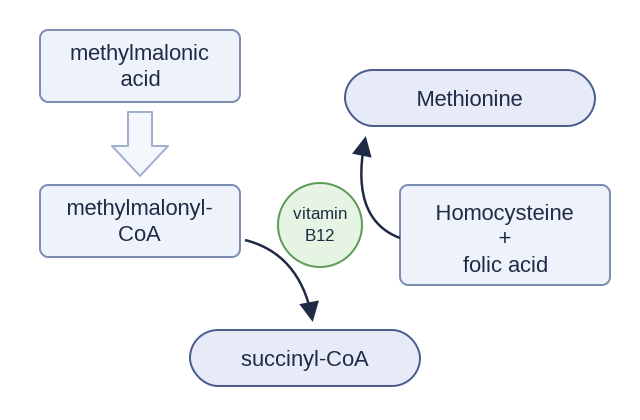
Vitamin B12 is not connected to diabetic mellitus but can affect its development and management.14 Vitamin B12 changes homocysteine to methionine.15 Elevated homocysteine levels due to vitamin B12 deficiency can play a role in developing insulin resistance and other symptoms of diabetic mellitus.16
Deficiency of this vitamin can lead to an elevated blood sugar level by impairing proper functioning of the enzymes involved in glucose metabolism.17
Correcting the deficiency could improve insulin sensitivity and glycemic control in patients with diabetic mellitus.18
Vitamin B12 in dyslipidemia
The way homocysteine and vitamin B12 deficiency can play a role in development of dyslipidemia is through anemia causing decreased oxygen delivery to tissues and increasing risk factors for cardiovascular disease.Though the relationship between the two is not exactly understood and requires further investigation.15
Vitamin B12 in obesity
Vitamin B12 plays an important role in breaking down fats and proteins and a deficiency of this vitamin will slow down metabolism, increasing body weight.20
A hormone known as leptin involved in appetite signals the brain when you have eaten enough food. Deficiency of vitamin B12 will decrease leptin levels leading to weight gain and excess eating.21 Correcting the deficiency isn’t a silver bullet for weight loss. A proper diet and exercise are still needed to achieve proper weight.22
Diagnosis
The diagnosis of vitamin B12 deficiency is difficult since there’s no single measurement to diagnose or exclude the condition.23,24,25,26
Serum levels of <148pmol/L (depending on the assay) along with symptoms can be enough to start treatment.23 Although symptoms can also be present when levels are >148pmol/L.27 Serum B12, homocysteine, and methylmalonic acid (MMA) levels are undependable indicators of B12 responsive neuropathy which are neurological disorders that are responsive to B12 supplementation.28–30 In these circumstances, expert assessment involves discussing with patients a therapeutic trial of B12 injections.23,30,31
If a patient is confirmed to have B12 deficiency clinically and consumes vitamin B12 in adequate amounts then malabsorption ought to be present. Tests which indicate pernicious anemia are positive results for anti-intrinsic factor or anti-parietal cell antibodies; in patients with positive antibody tests, medical checkup for autoimmune thyroid disease is sensible.32 The diagnosis of chronic atrophic gastritis can be made by the presence of an elevated fasting serum gastrin level and a low level of serum pepsinogen I.33,34
Some experts suggest an endoscopy to be performed to confirm gastritis and exclude gastric cancers since patients with pernicious anemia are at increased risk for such cancers.33
Treatment
The main goals of B12 treatment are reversal of metabolic dysfunctions and resolution or prevention of signs and symptoms.Treatment is determined by the severity of the presentation and the cause of deficiency. Malabsorption should be considered in patients with signs and symptoms of vitamin B12 deficiency even with adequate dietary intake of B12 and should lead parenteral therapy.27
Inadequate dietary intake
The most common recommendation to prevent deficiency is supplementation with oral cyanocobalamin in the doses of 20-50 mcg or 50-150 mcg once daily.35,36
A higher supplemental B12 dosage may be needed with advancing age due to decrease in B12 absorption.It is recommended to have appropriate adjustment of the supplementation dose along with annual monitoring of B12 level.37
For patients with clinical deficiency due to inadequate dietary intake, intramuscular B12 treatment is started and changed to oral supplements when symptoms have resolved.2,31,38
Symptomatic deficiency in people with B12 malabsorption
Treatment plans vary between countries, for instance The British National Formulary (BNF) distinguishes the prescription of hydroxocobalamin according to the clinical presentation, for example "For neurological involvement, it is advised to administer hydroxocobalamin by intramuscular injection, initially 1 mg once daily on alternate days until no further improvement, then 1 mg every 2 months."27
Pharmacotherapeutic guidelines in the Netherlands however, recommend administration of 1000 mcg once or twice weekly for up to two years (for neurological involvement).39 Early studies as in the 1960s have shown that there are considerable variations among individuals in pharmacodynamics40–44 and dose requirements.45
Frequent regimens may be required in some patients especially in those with neurological symptoms varying from twice weekly to every 2-4 weeks to resolve and prevent symptoms. A possible reason could be the significant inter-individual difference in biliary B12 excretion. Normally more than two thirds of the biliary excreted B12 is reabsorbed in the small intestine, but is reduced in people with B12 malabsorption, eg, pernicious anemia.46,47
Nitrous oxide toxicity
Guidance on managing nitrous oxide toxicity associated with B12 deficiency has been recently issued by the Association of British Neurologists.48 It recommends treatment with alternate-day hydroxocobalamin as intramuscular therapy until all symptoms have resolved or there is no additional neurological improvement, along with long term B12 treatment depending on the presence of deficiency and total discontinuation from the use of nitrous oxide.27
Contraindications
Preparations which contain benzyl alcohol are contraindicated to consume in children and pregnant women.49 Cyanocobalamin can cause progression and aggravation of visual problems and is therefore contraindicated in people with Leber’s hereditary optic neuropathy (a mitochondrial disorder).50 Cyanocobalamin (but not hydroxocobalamin) is also unsafe in patients with renal insufficiency.51
Safer prescribing
Pregnancy and breastfeeding
Initiation or continuation of B12 treatment in pregnant or lactating women with the deficiency is safe.52 Risks of detrimental pregnancy outcomes are increased with B12 deficiency which can include early pregnancy loss, neural tube defects, pre-eclampsia and preterm birth,53,54 as well as insulin resistance.55
Children
Treatment in children is assessed individually, evidence based treatment advice in children is scanty.56
Symptom monitoring
If injection frequency is decreased, then monitoring symptoms should be done regularly (eg, every two to three months) as they can recur long after several months.27 Clinical improvement is not evaluated or monitored by measuring serum biomarkers, for instance B12 or MMA.57 Injection frequency should be based on clinical symptoms and not on biomarker evaluation.27
Medical Disclaimer
This article’s content is for the purpose of general education of the public. It does not replace medical advice from experts. Questions you may have should be answered by consulting a doctor. Contact your physician if you suspect a medical emergency.
References
Sources as cited by the author, Dr. Fatima Ahmad Sinjari.
- 1Obeid R, Heil SG, Verhoeven MMA, Van Den Heuvel EGHM, De Groot LCPGM and Eussen SJPM, Vitamin B12 intake from animal foods, biomarkers, and health aspects. Front Nutr 6:1–18 (2019).
- 2Green R, Allen LH, Bjørke-Monsen AL, Brito A, Guéant JL, Miller JW et al., Vitamin B12 deficiency. Nat Rev Dis Primers 3:1–25 (2017). https://doi.org/10.1038/nrdp.2017.40.
- 3Obeid R, Holzgreve W and Pietrzik K, Folate supplementation for prevention of congenital heart defects and low birth weight: an update. Cardiovasc Diagn Ther 9: S424–S433 (2019). https://doi.org/10.21037/cdt.2019.02.03.
- 4Kanvinde P, Khurana R, Mudaliar S. Diagnosis and treatment of vitamin B12 deficiency in children. Front Nutr. 2026 Jul 29;13:1883501. doi: 10.3389/fnut.2026.1883501. PMID: 42591473; PMCID: PMC13462225.
- 5Obeid R, Andrès E, Češka R, Hooshmand B, Guéant-Rodriguez RM, Prada GI, Sławek J, Traykov L, Ta Van B, Várkonyi T, Reiners K, The Vitamin B Consensus Panelists Group. Diagnosis, Treatment and Long-Term Management of Vitamin B12 Deficiency in Adults: A Delphi Expert Consensus. J Clin Med. 2024 Apr 10;13(8):2176. doi: 10.3390/jcm13082176. PMID: 38673453; PMCID: PMC11050313.
- 6Allen LH. How common is vitamin B-12 deficiency?Am J Clin Nutr 2009;89:693S-6S. doi:10.3945/ajcn.2008.26947A pmid:19116323
- 7Guralnik JM, Eisenstaedt RS, Ferrucci L, Klein HG, Woodman RC. Prevalence of anemia in persons 65 years and older in the United States: evidence for a high rate of unexplained anemia. Blood 2004;104:2263-8. doi:10.1182/blood-2004-05-1812 pmid:15238427
- 8Dekker MJHJ, Heerdink GC, Plattel CHM. Vitamin B12 Deficiency-Induced Neuropathy and Cognitive and Motor Impairment in the Elderly: A Case Study. Food Nutr Bull. 2024 Jun;45(1_suppl):S53-S57. doi: 10.1177/03795721241226886. PMID: 38987880.
- 9Miceli E., Lenti M.V., Padula D., Luinetti O., Vattiato C., Monti C.M., Di Stefano M., Corazza G.R. Common features of patients with autoimmune atrophic gastritis. Clin. Gastroenterol. Hepatol. 2012;10:812–814. doi: 10.1016/j.cgh.2012.02.018.
- 10Singla R, Garg A, Surana V, Aggarwal S, Gupta G and Singla S, Vitamin B12 deficiency is endemic in Indian population: a perspective from North India. Indian J Endocrinol Metab23:221 (2019). https://doi.org/10.4103/ijem.ijem_122_19.
- 11Wolffenbuttel BHR, Wouters HJCM, Heiner-Fokkema MR, van der Klauw MM. The many faces of cobalamin (vitamin B12) deficiency Mayo Clin Proc Innov Qual Outcomes 2019;3:-14. doi: 10.1016/j.mayocpiqo.2019.03.002. pmid: 31193945
- 12Lindenbaum J, Healton EB, Savage DG, etal. Neuropsychiatric disorders caused by cobalamin deficiency in the absence of anemia or macrocytosisN Engl J Med 1988;318:-8. doi: 10.1056/NEJM198806303182604. pmid: 3374544
- 13BMJ 2024;385:q1019
- 14Tk M, Butola LK and Mujawar A, Effect of Glycemic Control on Vitamin b12 Status in Type 2 Diabetes Mellitus. IJBAMR 9:7–11 (2019) https://www.researchgate.net/publication/344521164_Effect_of_glycemic_control_on_vitamin_b12_status_in_type_2_diabetes_mellitus.
- 15Harikrishnan, S., Kaushik, D., Kumar, M., Kaur, J., Oz, E., Proestos, C., Elobeid, T., Karakullukcu, O.F. and Oz, F. (2025), Vitamin B12: prevention of human beings from lethal diseases and its food application. J Sci Food Agric, 105: 10-18. https://doi.org/10.1002/jsfa.13661
- 16Verma V, Nim RK, Singh P, Kumar M, Singh G and Singh AK, Vitamin B12 deficiency among vegetarian and non-vegetarian diabetic population receiving prolonged metformin based oral hypoglycemic agents therapy. Int J Med 4:1150 (2017). https://doi.org/10.18203/2349-3933.ijam20173249.
- 17Didangelos T, Karlafti E, Kotzakioulafi E, Margariti E, Giannoulaki P, Batanis G et al., Vitamin B12 supplementation in diabetic neuropathy: a 1-year, randomized, double-blind, placebo-controlled trial. Nutrients 13:395 (2021). https://doi.org/10.3390/nu13020395.
- 18Sakamoto M, Type 2 diabetes and glycemic variability: various parameters in clinical practice. J Clin Med Res 10: 737–742 (2018). https://doi.org/10.14740/jocmr3556w.
- 19Boachie J, Adaikalakoteswari A, Samavat Jand Saravanan P, Low vitamin B12 and lipid metabolism: evidence from pre-clinical and clinical studies. Nutrients 12:1925 (2020). https://doi.org/10.3390/nu12071925.
- 20Rippin H, Hutchinson J, Jewell J, Breda J and Cade J, Adult nutrient intakes from current National Dietary Surveys of European populations. Nutrients 9:1288 (2017). https://doi.org/10.3390/nu9121288.
- 21Bhushan B, Tomar SK and Chauhan A, Techno-functional differentiation of two vitamin B12 producing lactobacillus plantarum strains: an elucidation for diverse future use Appl. Microbiol Biotechnol 101: 697–709 (2016). https://doi.org/10.1007/s00253-016-7903-z.
- 22Guetterman H, Huey SL, Knight R, Fox AM, Mehta S and Finkelstein JL, Vitamin B-12 and the gastrointestinal microbiome: a systematic review. Adv Nutr 13: 530–558 (2022). https://doi.org/10.1093/advances/nmab123.
- 23Devalia V, Hamilton MS, Molloy AMBritish Committee for Standards in Haematology. Guidelines for the diagnosis and treatment of cobalamin and folate disorders Br J Haematol 2014;166:-513. doi: 10.1111/bjh.12959. pmid: 24942828
- 24Sukumar N, Saravanan P. Investigating vitamin B12 deficiency BM/ 2019;365:. doi: 10.1136/bmj.l1865. pmid: 31076395
- 25Wolffenbuttel BHR, Wouters HJCM, Heiner-Fokkema MR, van der Klauw MM. The many faces of cobalamin (vitamin B12) deficiency Mayo Clin Proc Innov Qual Outcomes 2019;3:-14. doi: 10.1016/j.mayocpiqo.2019.03.002. pmid: 31193945
- 26Hunt A, Harrington D, Robinson S. Vitamin B12 deficiency BM/ 2014;349:. doi: 10.1136/bmj.g5226. pmid: 25189324
- 27BMJ2023;383:e071725 http://dx.doi.org/10.1136/bmj-2022-071725
- 28Graber JJ. Sherman FT, Kaufmann H, Kolodny EH, Sathe S. Vitamin B12-responsive severe leukoencephalopathy and autonomic dysfunction in a patient with "normal" serum B12 levels)Neurol Neurosurg Psychiatry 2010;81:-71. doi: 10.1136/jnnp 2009.178657. pmid: 20587489
- 29Julian T, Syeed R, Glascow N, Angelopoulou E, Zis P. B12 as a treatment for peripheral neuropathic pain: a systematic reviewNutrients 2020;12: doi: 10.3390/nu12082221. pmid: 32722436
- 30Solomon LR. Vitamin B12-responsive neuropathies: a case series Nutr Neurosci 2016;19:-8.doi: 10.1179/1476830515Y.0000000006. pmid: 25710280
- 31Carmel R. How I treat cobalamin (vitamin B12) deficiency Blood 2008;112:-21. doi: 10.1182/blood-2008-03-040253. pmid: 18606874
- 32AU - Sally P. Stabler TI - Vitamin B<sub>12</sub> Deficiency PT - Journal Article DP - 2013 TA - New England Journal of Medicine PG - 149-160 VI - 368 IP - 2 AID - 10.1056/NEJMcp1113996 [doi] PMID - 23301732 4100 - https://www.nejm.org/doi/full/10.1056/NEJMcp1113996 SO - New England Journal of Medicine 2013-01-10 368(2): 149-160
- 33Toh, BH, Chan, J, Kyaw, T, Alderuccio, F. Cutting edge issues in autoimmune gastritis. Clin Rev Allergy Immunol2012;42:269-278
- 34Lewerin, C, Jacobsson, S, Lindstedt, G, Nilsson-Ehle, H. Serum biomarkers for atrophic gastritis and antibodies against Helicobacter pylori in the elderly: implications for vitamin B12, folic acid and iron status and response to oral vitamin therapy. Scand J Gastroenterol 2008;43:1050-1056
- 35Niklewicz A, Smith AD, Smith A, etalCluB-12. The importance of vitamin B12 for individuals choosing plant-based dietsEur / Nutr 2023:62:-9. doi: 10.1007/s00394-022-03025-4. pmid: 36469110
- 36Scenario: management of anaemia - vitamin B12 and folate deficiency. https://cks.nice.org.uk/topics/anaemia-b12-folate-deficiency/management/management/
- 37Porter KM, Hoey L, Hughes CF, etal. Associations of atrophic gastritis and proton-pump inhibitor drug use with vitamin B12 status, and the impact of fortified foods, in older adults. Am/ Clin Nutr 2021;114: 94. doi: 10.1093/ajcn/nqab193. pmid: 34134144
- 38Green R. Anemias beyond B12 and iron deficiency: the buzz about other B's, elementary, and nonelementary problems. Hematology Am Soc Hematol Educ Program 2012;2012:-8. doi: 10.1182/asheducation.V2012.1.492.3800162. pmid: 23233624
- 39National Health Care Institute TNHhwfn. https://www.farmacotherapeutischkompas.nl/
- 40Chalmers JN, Shinton NK. Comparison of hydroxocobalamin and cyanocobalamin in the treatment of pernicious anaemia. Lancet 1965;2:-8. doi: 10.1016/S0140-6736(65)92336-6. pmid: 4165301
- 41Tudhope GR, Swan HT, Spray GH. Patient variation in pernicious anaemia, as shown in a clinical trial of cyanocobalamin, hydroxocobalamin and cyanocobalamin-zinc tannate. Br J Haematol 1967;13:-28. doi: 10.1111/j.1365-2141.1967.tb08734.x. pmid: 6019807
- 42Bastrup-Madsen P. Treatment of vitamin B12 deficiency. Evaluation of therapy with cyanocobalamin, hydroxocabalamin, and depot cobalamin Betolvex. Scand | Gastroenterol Suppl 1974;29:-95.pmid: 4530460
- 43N.N. To-day's Drugs. To-day's drugs. Br Med J 1963;2:7. doi: 10.1136/bmj.2.5351.225. pid: 20789931
- 44Hertz H, Kristensen HP, Hoff-Jorgensen E. Studies on vitamin B12 retention. Comparison of retention following intramuscular injection of cyanocobalamin and hydroxocobalamin. Scand Haemato/ 1964;1:-15. doi: 10.1111/j.1600-0609.1964.tb00001.x. pmid: 14175719
- 45Neumark E. International Congress of Haematology, Cambridge, 1950. Acta Haemato/ 1951;5:-17. pmid: 14837678
- 46Grasbeck R, Nyberg W, Reizenstein P. Biliary and fecal vit. B12 excretion in man: an isotope study. Proc Soc Exp Biol Med 1958;97:-4. doi: 10.3181/00379727-97-23879. pmid: 13554481
- 47Doets EL, In't Veld PH, Szczecinska A, etal. Systematic review on daily vitamin B12 losses and bioavailability for deriving recommendations on vitamin B12 intake with the factorial approach. Ann Nutr Metab 2013;62:-22.
- 48Association of British Neurologists Clinical Practice Guide. Nitrous Oxide-Induced Subacute Combined Degeneration of the Cord. https://www.theabn.org/resource/collection/6750BAE6-4CBC-4DDB-A684-116E03BFE634/N20-SACD_Guidelines_-_ABN_-_12.02_-_1.1.11_-_AP_FI- NAL_FOR_RELEASE.pdf
- 49EMA/CНMP/272866/2013 C/HMPC. Benzyl alcohol and benzoic acid group used as excipients. https://www.ema.europa.eu/en/documents/report/benzyl-alcohol-benzoic-acid-group-used-ex-cipients-report-published-support-questions-answers-benzy\/chmp/508188/2013-t_en.pdf
- 50ULC. MP. Prescribing information cyanocobalamin injection, USP (vitamin B12) https://pdf.hres.ca/dpd_pm/00026115.PDF
- 51Spence JD. B vitamin therapy for homocysteine: renal function and vitamin B12 determine cardiovascular outcomes. Clin Chem Lab Med 2013;51:-7. doi: 10.1515/cclm-2012-0465. pmid: 23449527
- 52Hydroxocobalamin. https://cks.nice.org.uk/topics/anaemia-b12-folate-deficiency/prescribing-in-formation/hydroxocobalamin/
- 53Rogne T, Tielemans M), Chong MF, etal. Associations of maternal vitamin B12 concentration in pregnancy with the risks of preterm birth and low birth weight: a systematic review and meta-analysis of individual participant dataAm / Epidemiol 2017;185:-23. doi: 10.1093/aje/kww212. pmid: 28108470
- 54Behere RV, Deshmukh AS, Otiv S, Gupte MD, Yajnik CS. Maternal vitamin B12 status during pregnancy and its association with outcomes of pregnancy and health of the offspring: a systematic review and implications for policy in IndiaFront Endocrinol (Lausanne) 2021;12:619176. doi: 10.3389/fendo.2021.619176. pmid: 33912132
- 55Yajnik CS, Deshmukh US. Maternal nutrition, intrauterine programming and consequential risks in the offspring. Rev Endocr Metab Disord 2008;9:-11. doi: 10.1007/s11154-008-9087-z. pmid: 18661241
- 56Devalia V, Hamilton MS, Molloy AMBritish Committee for Standards in Haematology. Guidelines for the diagnosis and treatment of cobalamin and folate disorders Br ) Haematol 2014;166:-513 doi: 10.1111/bjh.12959. pmid: 24942828
- 57Solomon LR. Cobalamin-responsive disorders in the ambulatory care setting: unreliability of cobalamin, methylmalonic acid, and homocysteine testingBlood 2005;105:-85, author reply 1137. doi: 10.1182/blood-2004-04-1641. pmid: 15466926